
Many business owners believe that having a beautiful website is enough to attract customers online. It is not. Every year, companies invest serious money into design, logos, branding, photography, and advertising campaigns, yet still struggle to generate leads, sales, or customer confidence. The problem is rarely beauty alone. The real issue is that many websites look good visually but fail strategically.
"People do not become customers because a website is pretty. They become customers when the website makes the business feel clear, credible, useful, and safe to trust."
Writes with a practical operator's lens on seo / ux, blending field experience, implementation detail, and clear decision-making guidance.
Customers judge experience, not decoration
Modern customers no longer evaluate a business only by how polished the first screen looks. They judge the entire experience. A website is not simply a digital brochure anymore. It is the first impression, the sales representative, the support desk, the credibility indicator, and often the deciding factor between your business and a competitor. If that experience feels slow, confusing, outdated, or difficult to use, trust can disappear within seconds.
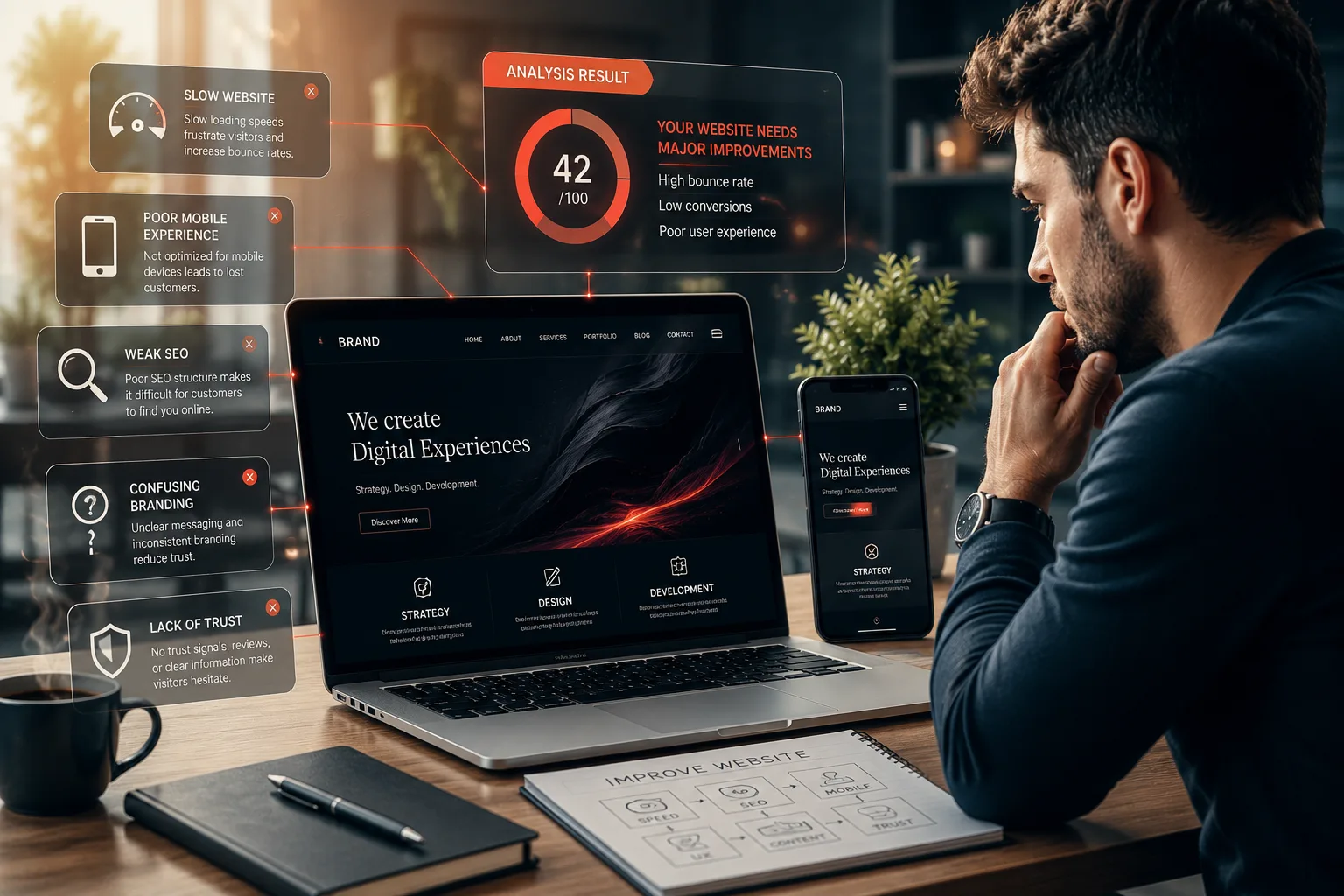
This is why many visually attractive websites still fail to convert. The design may look impressive in a portfolio screenshot, but the actual user journey is broken. Visitors cannot find the information they need. The message is unclear. The page loads too slowly. The mobile layout feels frustrating. The call to action is buried. The brand looks polished, but the experience does not help people make a decision.
Speed is part of the customer experience
One of the biggest reasons beautiful websites fail is performance. Modern users expect pages to load almost instantly. If a website takes too long to appear, many visitors leave before they ever see the design. That lost opportunity is silent. No one sends a complaint. They simply close the page and choose another option.
Speed is not just a technical detail. It shapes how professional the business feels. A slow website creates doubt before the company has a chance to explain its value. Search engines also reward faster, better-optimized pages, which means poor performance can hurt both conversion and visibility. A beautiful website that loads slowly is like a luxury storefront with a locked front door.
Mobile weakness destroys trust quietly
Most website traffic now comes from mobile devices, but many businesses still approve designs from large desktop screens. That creates a dangerous blind spot. A site can look perfect in a presentation and still perform poorly on the phone where customers actually discover it. Buttons become difficult to tap. Text becomes hard to read. Layouts break. Images load slowly. Navigation feels cramped or confusing.
Customers notice these problems immediately, even when business owners do not. A poor mobile experience communicates that the company is not paying attention to the details that matter. For many industries, that single feeling is enough to reduce confidence. Mobile optimization is no longer optional polish. It is basic credibility.
Good UX turns attention into action
Many websites focus heavily on visual effects while ignoring usability. They add animations, dense sections, clever layouts, and decorative interactions, but make it harder for visitors to understand what to do next. A modern website should guide people naturally. Good UX design creates clarity, reduces friction, and moves users toward the right action without making them work for it.
The best websites do not overwhelm visitors with options. They simplify decisions. They make the value clear, answer obvious questions, remove hesitation, and place calls to action where they belong. When UX is weak, even strong branding and beautiful visuals cannot save the page because the visitor never reaches a moment of confidence.
Branding creates emotional trust
Branding also plays a powerful psychological role. Customers subconsciously judge professionalism through colors, typography, spacing, imagery, consistency, and overall visual harmony. Even when users cannot explain why a website feels wrong, they can sense when the brand lacks quality or credibility. Trust is emotional before it becomes logical.
A weak logo, inconsistent design system, poor imagery, outdated styling, or mismatched messaging can reduce confidence instantly. The actual service may be excellent, but the website can make it feel smaller, less organized, or less reliable than it is. Strong branding does not exist to decorate the business. It exists to help customers believe the business is capable of delivering.
SEO makes the website discoverable
Another reason beautiful websites fail is that they are launched without proper search engine optimization. Missing metadata, weak page structure, oversized images, poor content hierarchy, broken technical setup, and weak internal linking all reduce online visibility. A beautiful website that search engines cannot understand is like opening a luxury store in the middle of an empty desert.
SEO is not something to sprinkle on after launch. It should influence the structure of the website, the page titles, the content strategy, the image handling, the technical performance, and the way pages connect to each other. People cannot become customers if they never find you. Visibility and conversion have to work together.
Conversion requires a complete system
Modern websites must perform on multiple levels at the same time. They need to look professional, load quickly, work perfectly on mobile devices, rank well in search engines, communicate value clearly, build trust instantly, guide users smoothly, and support business growth. Design alone is no longer enough because customer expectations are higher than ever.
The businesses succeeding online are not just publishing attractive pages. They are building complete digital experiences. They understand that every section has a job. The hero must create orientation. The services section must clarify value. The proof must reduce risk. The navigation must remove friction. The content must answer search intent. The call to action must feel natural, not forced.
A website should be a growth system
At Lanawi, we believe websites should do far more than look modern. They should communicate trust, improve visibility, increase conversions, support scalability, strengthen branding, and create seamless customer experiences. A successful website is not just a piece of design. It is a business growth system.
As technology evolves, customer expectations will continue rising. Businesses that invest in performance, user experience, SEO, branding, and intelligent digital systems today will build a major advantage for the future. In the modern digital world, people do not simply buy products or services. They buy confidence. Your website is often where that confidence begins.
Strong execution comes from turning good principles into repeatable operating habits. That is the difference between interesting advice and durable results.
Discussion
0 comments
Comments are paused while Lanawi upgrades the community experience.